Kalima for Education
Kalima helps schools, universities, and training teams turn spoken lessons into live, searchable text.
Students follow the lecture as it happens. Instructors share a cleaner record afterward, and multilingual groups can add translation in the same session.

Education transcription should support learning in the moment
Lecture notes often arrive late. They vary from one student to the next, and they can miss the one explanation that made a topic click.
Kalima gives each class a shared transcript that works during the session and after it. Students get live access and multilingual support, and no one has to take notes by hand to keep the record.
Why education teams look for transcription
Education workflows need clarity during the class and a dependable record after it.
Learners miss details while trying to take notes
Students cannot always listen, understand, and write at the same time. A live transcript gives them another way to follow the explanation.
Multilingual classes need more support
International learners may understand the topic but miss phrasing, vocabulary, or fast transitions in a second language.
Recorded material takes time to review
A searchable transcript helps learners find the relevant part of a lecture without replaying the full session.
How education teams use Kalima
Kalima works best when the transcript becomes part of the teaching and review loop.
Share live lecture text
Let students follow the transcript during lectures, seminars, workshops, and training sessions.
Support multilingual learners
Add translation for viewers who need help following the session in another language.
Build searchable study records
Use transcript history to help learners revisit explanations, terminology, and Q&A moments.
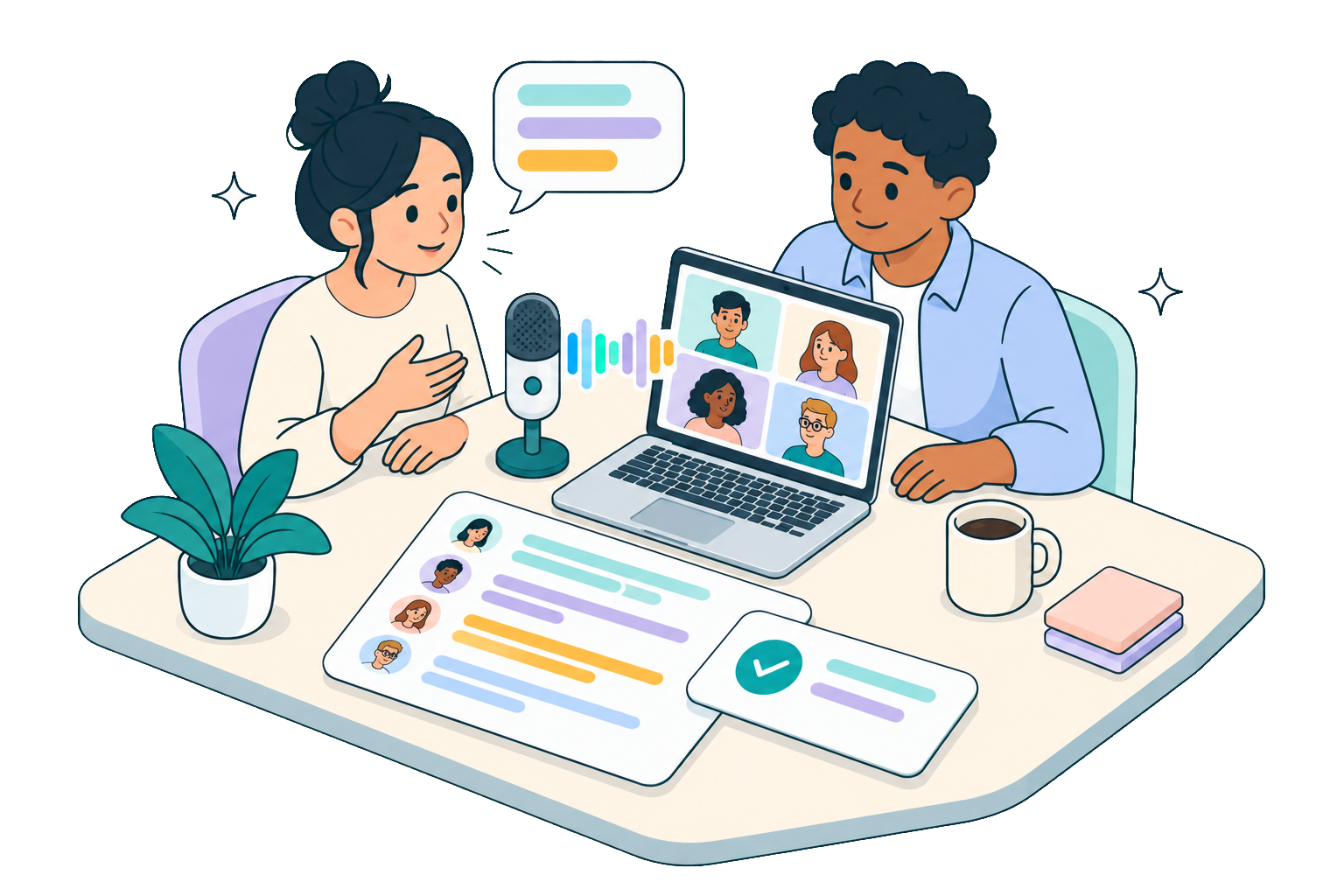
What improves with live education transcripts
Accessibility is part of the value. A shared transcript also speeds up review, sharpens study material, and keeps a cleaner record of each session.
More ways to follow the class
Learners can listen and read at the same time, which helps when audio quality, speed, or language is a barrier.
Faster study review
Searchable transcripts make it easier to return to the exact concept, example, or question that matters.
Cleaner teaching archives
Departments and training teams can preserve session content without relying on scattered individual notes.
Feature fit for education
Education teams usually need a transcript workflow that helps both live learners and later review.
Before you record
Kalima runs on your own device, so nobody in the meeting sees it. That is exactly why you should announce it: tell everyone before you start and ask for their consent. If you use Kalima at work, agree on it with your data protection officer and, where there is one, your works council first.
Education teams ask
Common questions from instructors, program leads, and training teams.
Further reading
Related use cases
Make spoken learning easier to follow
Start with a live transcript for your next lecture, seminar, or training session.